
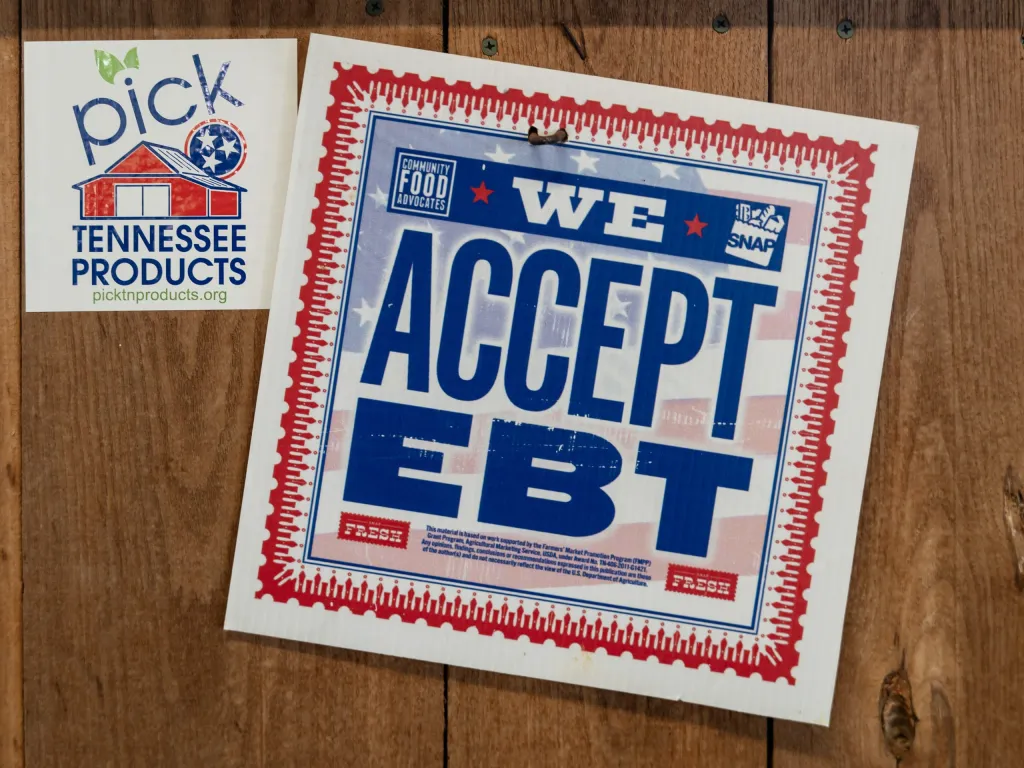
For Nashville voters who rely on food assistance or help paying for health insurance, November’s election brings competing proposals over who should qualify for support and how government should pay for it. Tennessee candidates are divided over Medicaid expansion, insurance subsidies and the response to interruptions in federal food aid.
Those decisions come as fewer Tennesseans receive Supplemental Nutrition Assistance Program benefits. Enrollment declined from 696,791 people in July 2025 to 610,774 in August 2026, according to figures reported by the Tennessee Justice Center — a decrease of more than 86,000 people.
Anna Grace Dastugue, the organization’s director of nutrition policy, said that decline does not reflect an easing of families’ financial pressures. She pointed to rising unemployment and higher grocery and gasoline prices as reasons food assistance remains necessary.
Federal changes under HR-1, also known as the One Big, Beautiful Bill, are reshaping the debate. Dastugue said the law introduces state responsibility for a portion of SNAP benefit costs, with the share potentially reaching 15 percent depending on payment accuracy.
Payment error rates are calculated using samples of SNAP cases. Dastugue said determining benefits accurately can be difficult when households have changing earnings, child support payments, expenses or employment. Those circumstances also make it harder for recipients to keep up with documentation requirements.
She warned that additional eligibility paperwork can create barriers for people with limited literacy, unstable finances or changing household arrangements. Work-related requirements and other eligibility changes pose challenges for veterans, displaced people, older adults and parents of teenagers, she said.
Health coverage is also shifting. In early October, Medicaid eligibility restrictions affected groups including refugees without green cards and immigrants with Temporary Protected Status. Families buying marketplace insurance have also faced higher costs following the expiration of enhanced subsidies.
In the governor’s race, Democrat Jerri Green supports expanding Medicaid, an option Tennessee has not adopted. She says expansion would help working families obtain coverage and address financial pressures contributing to rural hospital closures. Her healthcare priorities also include rural maternal care and lower costs for rural families.
Republican Sen. Marsha Blackburn has backed the Keep SNAP Funded Act, which sought to maintain federal funding for food benefits during lapses in government appropriations. She also supported the Rural Health Transformation Program, which awarded Tennessee $206 million for rural healthcare.
Blackburn did not support the Lower Health Care Costs Act when it came before the Senate in December 2025. That legislation would have broadened eligibility for premium tax credits and increased their value.
Independent gubernatorial candidate Lauren Pinkston proposes using Summer EBT funding to connect families eligible for SNAP with farmers, alongside education about affordable local food. Her proposal links assistance for children with support for Tennessee agriculture.
Another independent candidate, David Hatley, has emphasized keeping rural hospitals operating. In comments to WSMV, he proposed emergency-room clinics in communities to shorten the distance rural residents must travel for emergency care.
The debate also separates candidates in the 7th Congressional District, where Republican incumbent Matt Van Epps faces Darden Copeland.
During his 2025 campaign, Van Epps said he would have voted for the federal tax-and-spending legislation that changed benefit programs. He also called for healthcare price transparency and expressed concern about families losing SNAP assistance during the government shutdown.
Van Epps supported restoring federal food-aid funding but opposed having Tennessee reallocate state money to replace interrupted benefits. He argued that reopening the federal government was the appropriate response.
Copeland supports expanding and strengthening Medicaid and continuing the Affordable Care Act’s enhanced insurance subsidies. He has argued that Congress should address waste and fraud rather than reduce benefits reaching families in need.
The proposals involve different levels of government. Tennessee’s governor would help shape the state’s approach to Medicaid and its budget response to federal changes, while members of Congress would vote on federal funding and eligibility laws. For households navigating both food assistance and health coverage, the election therefore carries consequences beyond any single program.