
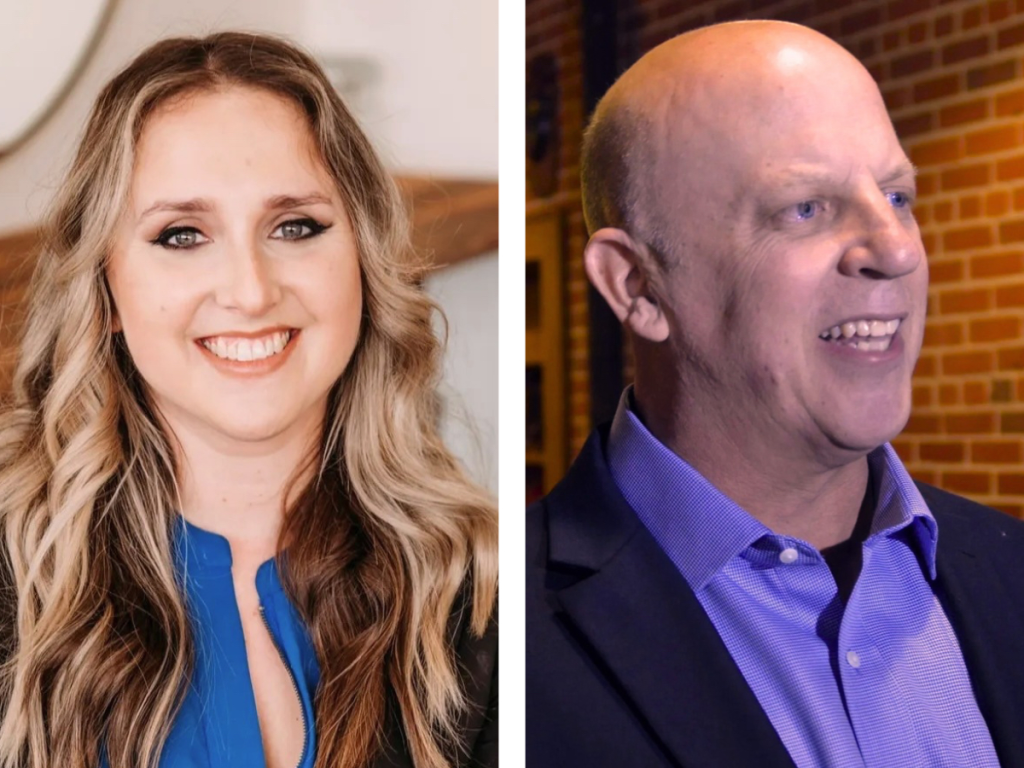
Voters in southeastern Davidson County will help decide Tennessee’s 4th Congressional District race this fall, joining an electorate that previously handed Republican U.S. Rep. Scott DesJarlais a commanding victory over Democratic challenger Victoria Broderick.
Their rematch takes place on different political terrain. Republican lawmakers’ May redistricting extended the 4th District into Nashville while removing several counties along the Alabama border. The change reduces the district’s Republican lean without erasing it, giving Broderick a less daunting electoral map as she challenges the incumbent again.
A Tennessee Lookout analysis found that Donald Trump would have carried the newly configured district by 24 percentage points in the 2024 presidential election. His margin under the previous boundaries was nearly 44 points. Those calculations offer a measure of the district’s partisan makeup, not a prediction of this year’s congressional result.
DesJarlais defeated Broderick by more than 40 percentage points in 2024. Independents Jacob Anders and Clay Faircloth also are on this year’s ballot.
The new district retains Murfreesboro and the southern portion of the Cumberland Plateau. It no longer includes Lawrence, Giles or Lincoln counties, and a small section of Rutherford County also was removed. The addition of southeastern Davidson County gives the race a direct Nashville constituency beyond its historical connections to former Democratic representatives Al Gore and Jim Cooper.
Broderick, 34, works in tech support and serves on the Tennessee Democratic Party’s executive committee. Her Lincoln County home is now outside the district. She won the August Democratic primary against a field that included Metro Councilmember Mike Cortese, whose fundraising exceeded that of all the other candidates, including DesJarlais, combined.
At a recent candidate forum at Rutherford County Baptist Church in Smyrna, Broderick said she resumed campaigning the month after her 2024 loss. She described continued organizing as central to her effort in a district she believes both parties have overlooked.
Her platform centers on household expenses. She supports Medicare for All, a higher minimum wage, universal prekindergarten and assistance with child care. She also wants to end corporate tax loopholes and tax subsidies benefiting wealthy people.
Questions at the Smyrna forum ranged from immigration to transgender medical care and the war in Iran. Broderick repeatedly connected her answers to economic pressures. She blamed the Iran war, and DesJarlais’ support for it, for increases in gasoline and fertilizer costs affecting district residents.
DesJarlais, a physician first elected in 2010, chairs a House Armed Services subcommittee. He has defended the war as a national security priority, arguing in a recent interview that weakening Iran would put the United States in a stronger position before a possible future conflict with China.
He acknowledged the strain of higher fuel and grocery prices but argued that voters should weigh those costs against security considerations. He also suggested Trump had promised results too quickly and underestimated the Iranian Revolutionary Guard’s willingness to allow suffering among its own population.
Immigration presents another clear divide. DesJarlais has praised Trump’s enforcement policies and Immigration and Customs Enforcement, saying violent criminals should be the first targets. Broderick favors restructuring enforcement along the lines of the system that existed before 2003, rather than explicitly calling for ICE’s abolition. She argues that current enforcement practices harm communities.
On medical care for transgender minors, Broderick emphasized parents’ judgment and doctors’ expertise. She characterized political attention to the issue as a distraction from other needs facing families.
The candidates also enter the fall with substantially different financial resources. The latest campaign finance reports showed Broderick had raised less than $60,000, while DesJarlais had collected more than $500,000. Political action committees supplied more than half of his fundraising, with defense companies Northrop Grumman and Lockheed Martin among leading contributors. Broderick has criticized corporate influence in campaign financing.
DesJarlais did not attend the Smyrna forum. His record remains closely aligned with Trump, although he has questioned the president’s tone toward allies and opposed a Department of Veterans Affairs decision to close a clinic in his district. The administration subsequently delayed that closure.
For the Nashville residents newly added to the district, the election offers sharply contrasting approaches to federal spending, immigration enforcement and the balance between military objectives and everyday costs.