
Nashville voters face two decisions about the reach of Tennessee’s Constitution on Nov. 3: whether to remove the state’s ability to levy a property tax and whether to give crime victims broader rights to attend and participate in court proceedings.
The proposals, listed as Constitutional Amendments Two and Three, address different parts of state government. Neither starts from a blank slate. Tennessee already operates without a state property tax, and its Constitution already guarantees rights to crime victims. The ballot questions would make the first arrangement a constitutional requirement and expand the second.
Both have drawn support in the General Assembly, but Nashville lawmakers have split over whether the changes are necessary and what constraints or obligations they could create.
For homeowners in Davidson County, the immediate distinction is between state and local taxation. Amendment Two would prohibit a Tennessee state property tax. It would not eliminate Metro Nashville’s property tax, reduce local rates or change current property tax bills.
Tennessee has not levied a state property tax since the 1940s. A vote for the amendment would place a prohibition in the Constitution rather than leave the question to future state policymakers. A vote against it would reject that new prohibition, not create a state tax.
Supporters argue that a constitutional ban would protect homes, farms and businesses from an additional layer of taxation. The Yes on 2 campaign includes Tennessee Realtors and Farm Bureau Insurance, with Gov. Bill Lee and House Speaker Cameron Sexton on its leadership team. Rep. Bob Freeman, a Nashville Democrat, serves as its Davidson County chairman.
The proposal received bipartisan legislative support. Nashville Democratic Reps. Aftyn Behn and Justin Jones opposed it, as did Memphis Democratic Rep. Justin Pearson. Critics have questioned whether lawmakers should permanently give up a revenue option that future governments might need during an economic crisis.
Nashville Democrats Charlane Oliver and John Ray Clemmons have also emphasized a practical limit of the proposal: It offers no reduction in existing tax bills. For voters assessing its financial effect, the question is about preventing a potential state tax, rather than cutting one they currently pay.
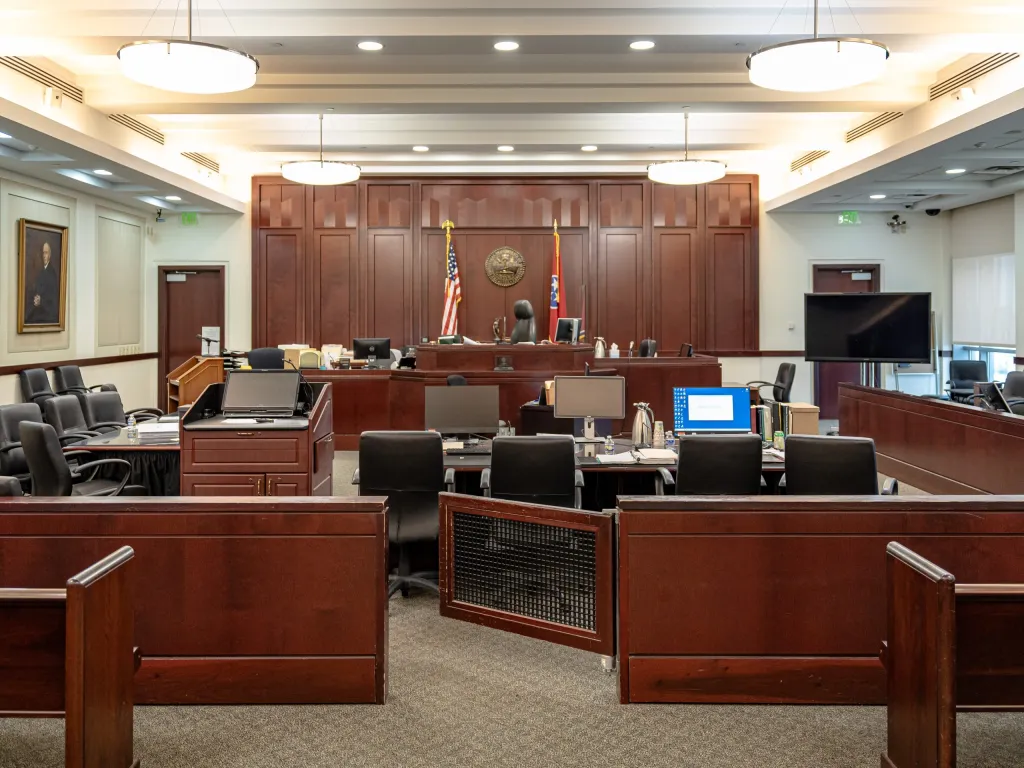
Amendment Three concerns how victims can take part in the criminal justice system. Known as Marsy’s Law, it would broaden constitutional protections governing attendance at proceedings and opportunities to address the court.
Under the existing Constitution, victims have a right to attend proceedings where defendants are entitled to be present. The amendment would extend that protection to all public criminal proceedings.
It would also revise victims’ right to be heard. Current language ties that right to relevant, critical stages of the criminal justice process defined by the legislature. The proposal would expressly allow victims, upon request, to speak in proceedings concerning release, pleas, sentencing, disposition and parole. It would also cover other relevant public proceedings involving a victim’s rights.
The measure passed the House unanimously in its most recent legislative consideration. Five senators voted against it, including Nashville Democrats Oliver and Jeff Yarbro. Opposition has centered on the expense and additional work for an already strained court system, along with questions about expanding protections that already exist. During debate, Yarbro raised concerns about the unknown cost of carrying out the changes.
The proposal is part of a national campaign named for Marsalee “Marsy” Nicholas, who was killed by her former boyfriend in 1983. Her brother, Henry Nicholas, subsequently advocated for victims’ rights amendments across the country. Ballotpedia counted 14 states that had adopted versions by 2025, with two later repealing them.
The amendments appear after the gubernatorial candidates on Tennessee’s ballot, alongside a separate proposal addressing bail. Each amendment faces two approval requirements: Its yes votes must outnumber its no votes, and its yes total must exceed half the number of votes cast in the governor’s race. Voters decide each constitutional question separately.