
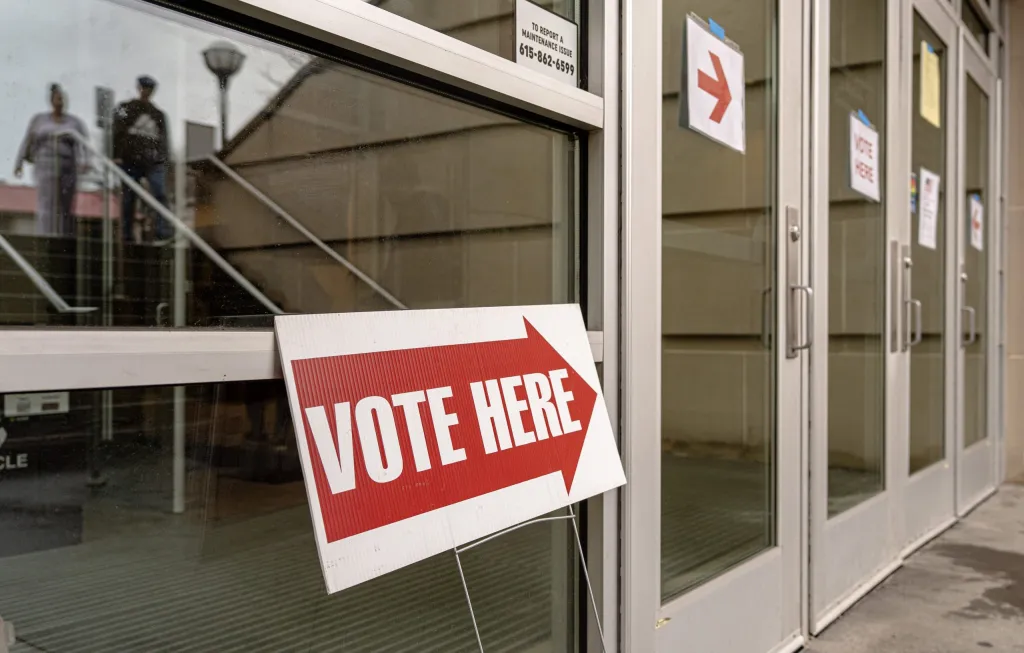
Nashville voters will help decide in November whether Tennessee judges should have broader authority to keep people in jail without bail before their criminal cases go to trial. The choice would change a constitutional protection that currently applies to nearly everyone accused of a crime in the state.
Proposed Constitutional Amendment No. 1 would expand the exceptions to the right to bail in Article I, Section 15 of the Tennessee Constitution. Supporters describe the measure as a way to prevent further violence. Opponents argue it would increase the government’s power to detain people who have not been convicted, without a dependable public-safety benefit.
The amendment would allow judges to deny bail to defendants charged with terrorism, second-degree murder, aggravated rape of a child, aggravated rape or grave torture. It would also cover other offenses carrying a legal requirement that a convicted person serve at least 85 percent of the sentence imposed.
That final provision reaches beyond the crimes named individually in the proposal. Tennessee sentencing laws adopted in recent years have substantially expanded the offenses subject to that threshold, making the sentencing requirement an important part of the amendment’s scope.
Approval would not automatically eliminate bail for everyone facing an eligible charge. Instead, the amendment would give judges discretion to deny it. For defendants in Nashville and elsewhere in Tennessee, the distinction concerns whether release on bail is legally available—not simply how much money a judge might require.
The Republican-led proposal passed the legislature in 2024 and again in 2025, clearing the legislative process for this year’s ballot. It is one of three proposed constitutional amendments Tennessee voters will consider this fall.
House Speaker Cameron Sexton, a Republican from Crossville, argued before the final legislative vote that the change had bipartisan backing and support from district attorneys, sheriffs and police chiefs across Tennessee. He said the constitution originally operated with a much broader set of capital offenses and emphasized that judges would retain discretion rather than face a requirement to deny bail.
Sexton’s public-safety argument centered on the risk that someone released while facing a violent charge could commit another violent offense.
District Attorney Jared Effler, who serves Tennessee’s 8th Judicial District, likewise supports the proposal. Writing in the Tennessee Bar Journal, Effler argued that it would allow judges to hold dangerous defendants when evidence is strong and require judges to explain those decisions publicly. He presented that process as a deliberate safeguard against additional harm.
Nashville defense attorney David Raybin sees the issue differently. In an opposing Tennessee Bar Journal essay, he argued that existing law already permits judges to tailor release decisions to individual defendants.
Raybin pointed to factors judges can consider now, including criminal records, previous failures to appear in court, employment and community connections. In his view, the amendment would enlarge detention authority rather than supply a missing tool for evaluating release.
Josh Spickler, executive director of the Memphis-based bail reform organization Just City, also opposes the measure. He argues that it would reinforce the mistaken idea that holding more legally innocent people before trial necessarily makes communities safer.
Spickler questioned the breadth of the 85-percent provision because the amendment does not individually name the offenses it would encompass. He and other advocates cite research indicating that greater use of pretrial detention does not reliably reduce future crime and that bail reforms do not produce crime spikes.
The debate follows declines in violent crime across Tennessee and major U.S. cities after the pandemic-era surge. Those trends form part of opponents’ challenge to arguments for broader detention powers.
Just City also participated in a 2024 lawsuit challenging a Tennessee law barring judges from considering a defendant’s ability to pay when setting bail. The organization argued that the restriction increased the risk of detention based on poverty. Like a community bail fund in Nashville, Just City operates a fund that helps people who cannot afford bail.
November’s vote addresses a separate but related question: which defendants can be denied bail altogether while awaiting trial.