
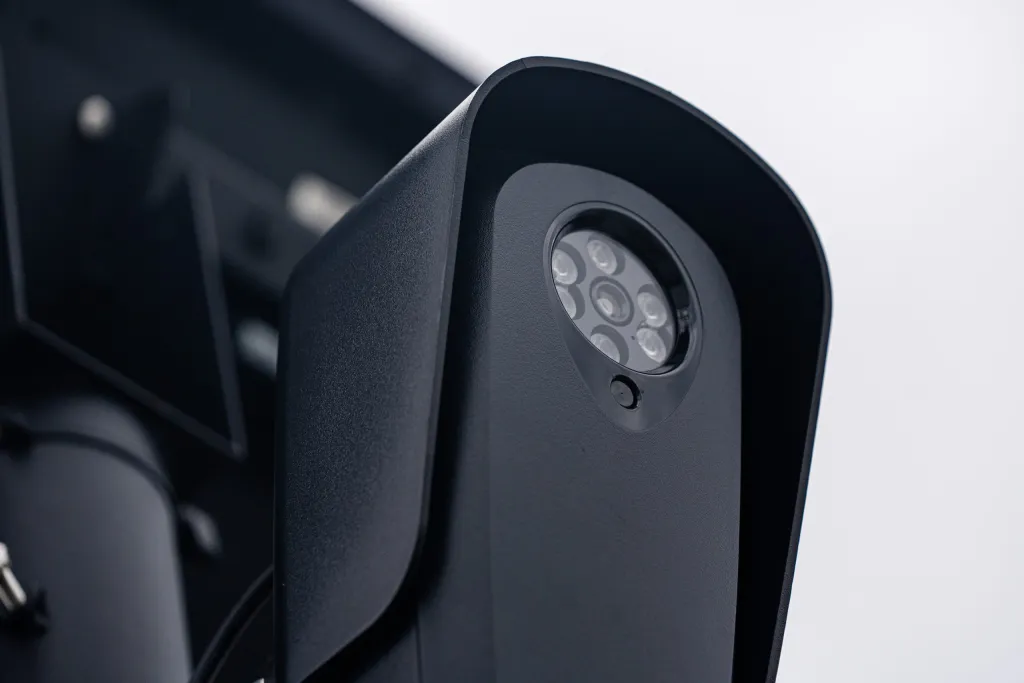
Nashville disputes over police surveillance and proposed data centers have become election issues reaching from state House races to the governor’s contest, with candidates offering sharply different approaches to privacy, artificial intelligence and local authority.
For North Nashville, the debate has a direct connection to Fisk University, where a proposed campus data center drew opposition this summer. Another proposed facility beside the Nashville Zoo also faced backlash. Those fights followed community resistance that stalled the Metro Nashville Police Department’s plan to deploy automated license plate readers last year.
The campaigns now present voters with choices beyond simply supporting or opposing technology. Candidates differ over who should regulate it, which agencies should have access to surveillance records and whether communities should be able to block police access to outside data networks.
In the governor’s race, Republican nominee U.S. Sen. Marsha Blackburn has increasingly emphasized privacy when discussing license plate readers. Earlier this year, she described automated surveillance as a useful public safety measure while also pledging to protect privacy. At later campaign appearances, including a September stop in Knoxville, she stressed the danger of expansive government surveillance and called for scrutiny of camera governance.
Two prominent Republicans appearing alongside Blackburn in August, Senate Majority Leader Jack Johnson and Knox County Mayor Glenn Jacobs, have been skeptical of Flock, a major supplier of license plate reader technology. Jacobs supported eliminating the cameras in Knox County.
Democratic gubernatorial nominee Jerri Green favors restrictions on how surveillance information is kept and shared. Her proposals include limits on data retention and a ban on sharing local surveillance data with federal immigration authorities.
Independent candidate Lauren Pinkston supports requiring people to verify license plate reader alerts. She also favors making outside agencies submit formal requests for information rather than allowing them to browse a shared network freely. Another independent candidate, David Hatley, supports an outright ban, arguing on his campaign website that abuses outweigh the cameras’ crime-solving benefits.
Those differences could become consequential at the Capitol. Some state lawmakers have indicated they intend to pursue restrictions on license plate readers, potentially putting legislation before the next governor.
In Nashville-area legislative races, candidates are also divided over the balance between police access and local decision-making. Eva Romero, the Republican challenging Democratic Rep. Shaundelle Brooks in House District 60, supports camera deployment. She has advocated state legislation that would prevent local officials from blocking police connections to public safety technology and data feeds.
Mark Proctor, the Democratic candidate facing Republican Bill Hancock for the open House District 59 seat, supports license plate readers with safeguards. Proctor has cited his experience as a retired Tennessee Highway Patrol major in explaining that position.
At the federal level, Republican U.S. Rep. Tim Burchett of Knoxville has introduced legislation to bar federal agencies from buying or accessing license plate readers. Eight other House members have joined as cosponsors, none from Tennessee. Darden Copeland, the Democrat challenging Republican Rep. Matt Van Epps in the 7th Congressional District, has also expressed opposition to their current use in communities.
The data center controversy has produced a separate set of campaign promises about how Tennessee should manage AI development.
Green says she would impose a statewide data center moratorium by executive order and pursue restrictions on AI use alongside measures aimed at AI-generated misinformation. Blackburn opposed the proposed data center near the Nashville Zoo and has supported preserving states’ ability to regulate artificial intelligence.
Blackburn also sponsored legislation with Democratic U.S. Sen. Adam Schiff of California aimed at protecting musicians and their work from unauthorized use in AI training. That issue has particular relevance in Nashville, where music is a central part of the economy and cultural life.
Congressional candidates disagree over the appropriate level of oversight. Copeland favors state and local decision-making on data centers, arguing that AI development is outpacing Congress. Van Epps’ campaign supports federal AI regulation intended to preserve U.S. leadership in the field.
In the 5th Congressional District, Democratic candidate Chaz Molder, Columbia’s mayor, supports data center moratoriums and AI rules addressing safety and worker protections.
For Nashville voters, the disputes connect neighborhood development decisions with broader questions about policing and technology. The election will help determine who sets those rules—and how much authority remains with local governments.