
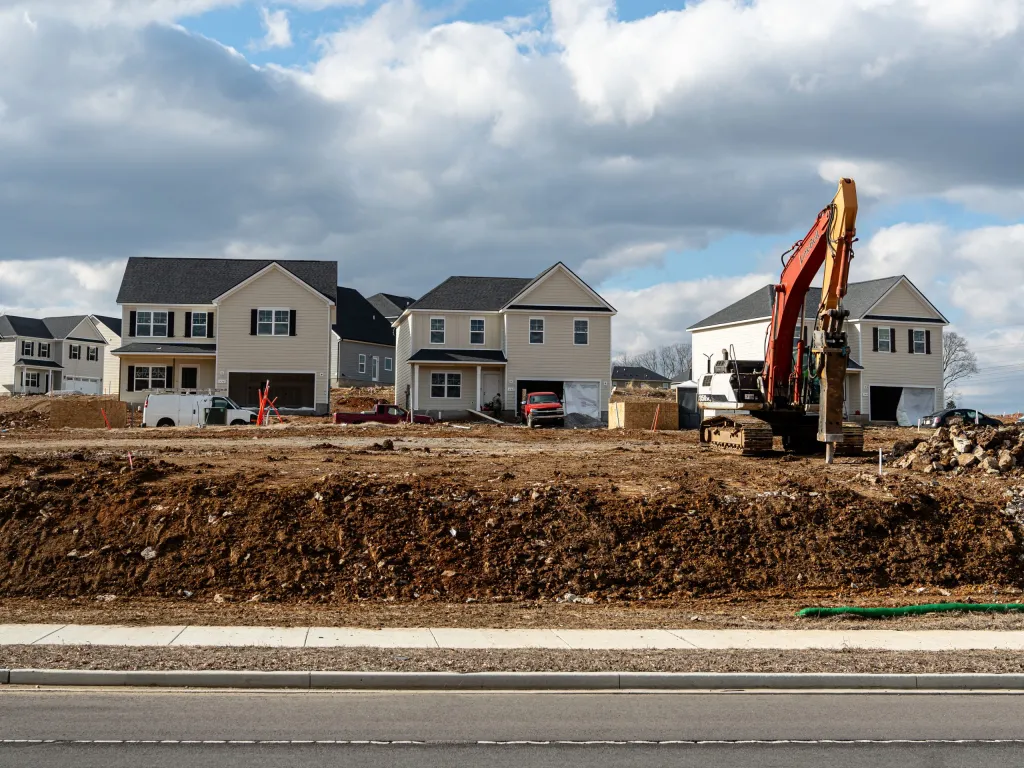
North Nashville’s supply of lower-cost rental homes has shrunk even as Nashville has added tens of thousands of rentals, putting neighborhood displacement at the center of a state election debate over how to make housing more affordable.
Housing researcher Jim Fraser’s analysis found that North Nashville lost 852 homes renting for less than $1,000 a month, measured in 2024 dollars, between the 2006–2010 and 2020–2024 periods. Across Nashville, the number of rentals below that threshold fell by about 15,000 while the overall rental supply grew by roughly 46,000.
The contrast highlights a challenge facing the next governor and local officials: expanding housing construction while ensuring that longtime residents can afford to stay. Candidates broadly support increasing supply, but their proposals differ substantially on government spending, development rules and assistance for renters and homeowners.
For Diamond Bell, 27, those policy questions are tied to a childhood home near Buchanan Street. Bell grew up partly on 14th Avenue North, where she and her siblings finally had separate bedrooms and could walk to Pearl-Cohn and Bud’s Hardware.
Her family left after the property changed owners and the new landlord increased the rent beyond her mother’s budget. As an adult, Bell encountered another obstacle: apartment income requirements that often called for earnings equal to three times the monthly rent.
She now shares a two-bedroom apartment in Goodlettsville with her sister for $1,780 a month. Once confident she would buy a home in North Nashville, Bell said she no longer sees a realistic path to ownership there.
The pressure extends well beyond neighborhoods near downtown. Fraser’s analysis found losses of 3,250 rentals below the $1,000 threshold along Nolensville Pike, 2,340 in Antioch and 1,093 in Madison. Those figures suggest that moving farther from the urban core does not necessarily preserve access to inexpensive housing.
Fraser, an associate professor at Virginia State University who previously taught at Vanderbilt and advised Nashville on housing policy, also documented Black residents moving from North Nashville, East Nashville and Edgehill into other Davidson County communities and surrounding counties. Longer commutes and reduced access to support services can follow those moves, he said.
Among the gubernatorial candidates, Republican nominee Marsha Blackburn favors reducing development barriers, including simplifying permitting. She argues that economic growth and fewer regulatory obstacles offer a better route to affordable homeownership than expanded government intervention.
Democrat Jerri Green proposes directing $10 million in Tennessee Assistance for Needy Families funding toward security deposits for young people and low-income residents on her first day in office. She also supports increasing housing supply and funding homeowner assistance programs.
Independent Lauren Pinkston wants to revise Tennessee Housing Development Authority lending to better serve first-time buyers and owners needing repairs. Her proposals include partnerships with Tennessee banks to expand loan access and reduce down payments, full funding for a property-tax freeze for low-income seniors, and annual limits on cities’ property-tax revenue increases.
Pinkston also supports allowing counties to impose proportionate impact fees on large developments, with exemptions for affordable housing and small infill projects.
Green Party candidate Dave Seeman proposes state investment in community land trusts, which can hold property and make homes available below market rates. He also favors zoning changes allowing greater density, faster permitting and more assistance for tenants facing eviction.
Those proposals reflect a broader disagreement among housing researchers about which tools deserve the most emphasis.
Fraser supports public acquisition of land for a professionally managed land trust. He credits Nashville with stepping up its affordable housing work in recent years, but argues that public investment remains insufficient relative to the scale of losses. The city’s April 2025 Unified Housing Strategy calls for 90,000 additional homes, including 20,000 affordable homes.
Vanderbilt economist Gerard Domènech-Arumí places greater emphasis on construction. He argues that Nashville’s housing production has struggled to meet demand from new residents and jobs, and points to Austin’s increased building and declining rents as a useful comparison. Rental assistance can help, he said, but sustained improvement requires more homes.
Vanderbilt researcher Warren Lowell cautions that adding units can also reshape who a neighborhood serves. His work examines how distressed properties can attract investors while discouraging people seeking a home to occupy. Redeveloping those lots can increase density while changing the streetscape and attracting wealthier buyers.
For residents such as Bell, the question is not simply whether Nashville builds more homes. It is whether those homes leave room for people with longstanding neighborhood ties to remain—or return.