
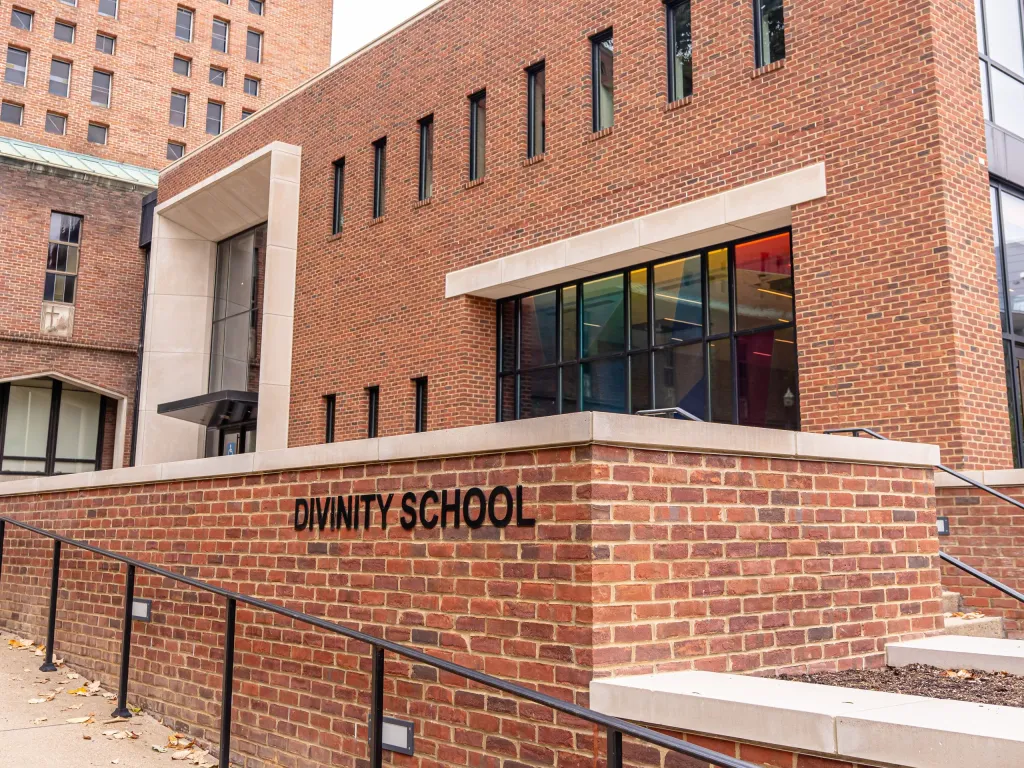
Vanderbilt University is taking direct oversight of its Divinity School’s operations through a receivership that administrators say will last no longer than two years. The move leaves academic authority with the school’s dean and faculty but has prompted concern about how restructuring could affect its mission and relationships across Nashville.
Dean Yolanda Pierce and Deputy Provost Tracey George notified students and faculty by email Tuesday. University leaders describe the arrangement as temporary, intended to restore the school to independent administration and create conditions for additional investment and growth.
George said Vanderbilt will oversee budgeting, space allocation, communications and the management of students and staff. Pierce will remain dean, and faculty will continue to control academics, she said.
Although receivership often carries associations with bankruptcy, George said Vanderbilt is using the term for an internal organizational review, not a bankruptcy-related restructuring. She characterized the work as collaborative and acknowledged that the terminology and process have caused anxiety among alumni and others.
The distinction between operational oversight and academic independence is central to the university’s explanation. But faculty members are seeking more information about the concerns that triggered the decision and how the school’s priorities will shape the resulting changes.
Phillis Sheppard, the Divinity School’s faculty chair for this academic year, said faculty want access to a fuller account of the data and reasoning behind receivership. She acknowledged fluctuations in demand for theological education but said enrollment figures alone should not determine the school’s direction.
Sheppard also questioned how Vanderbilt is incorporating the Divinity School’s distinctive history into its decisions. For faculty, she said, uncertainty extends to what a reorganized school will look like and what might be lost in the transition.
The school’s ties to social justice and Nashville’s Civil Rights Movement figure prominently in those concerns. Employees pointed to alumnus James Lawson, who helped organize the downtown sit-ins in the 1960s. One staff member noted that Vanderbilt was celebrating Lawson’s birthday as the school entered receivership.
Sheppard said communication matters not only within the university but also for the students and community partners who sustain the school’s relationships. Trust built through those connections, she cautioned, can be difficult to recover once damaged.
George placed the decision in the context of a national decline in demand for theological education over the past two decades. She said lower church participation has brought reduced demand for graduate training for church leaders, requiring Vanderbilt to reconsider the school’s focus and long-term needs.
She said other Vanderbilt academic units have completed receivership successfully and that another unit is currently in the process. A university source identified that unit as Peabody’s Department of Teaching and Learning. George said all Vanderbilt units that previously underwent receivership emerged stronger, and she expects the Divinity School to do the same.
Some employees see the current decisions differently. They questioned whether established programs could face further reductions in funding or offerings and criticized university spending on campuses in New York and San Francisco while existing units face pressure. One employee discussed those concerns anonymously to protect their job.
The restructuring also comes amid broader faculty objections to university governance under Chancellor Daniel Diermeier. Employees have described limited faculty participation in major decisions and dissatisfaction with communication from administrators.
A particular point of concern is the Board of Trust’s June 2026 adoption of “A Declaration of First Principles.” Its academic-freedom section says faculty must uphold scholarly standards rather than subordinate them to political or social aims. It identifies leadership changes, reorganization, receivership and closure as possible responses when academic units depart from those commitments.
Sheppard said she had no reason to reject the administration’s position that the declaration and the Divinity School’s receivership are unrelated. Still, she said their proximity creates an appearance of connection.
Faculty concerns also extend to an April humanities report commissioned by Vanderbilt and Washington University in St. Louis. Some professors challenged its methodology, including an author’s acknowledged use of artificial intelligence to review some scholarship it criticized.
For Sheppard, who teaches spirituality and social activism, the debate raises practical questions about teaching students both to examine ethical obligations and to act on them. She said the declaration and humanities report have generated worthwhile discussion, even as faculty continue to press for a clearer role in shaping the Divinity School’s future.