
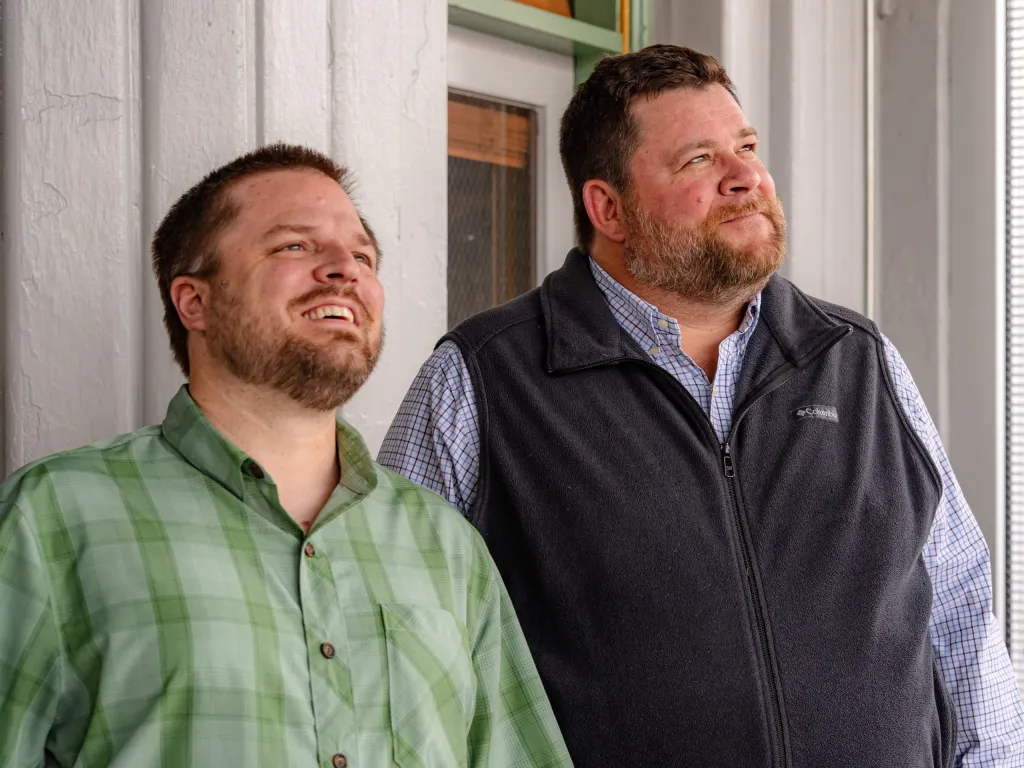
Residents in five more Middle Tennessee counties can now turn to Nashville Severe Weather for local forecasts and storm alerts, following an expansion supported by the hiring of a full-time meteorologist.
The independent weather service added Cheatham, Robertson, Sumner, Wilson and Rutherford counties on Thursday, Oct. 1. Those communities join its existing coverage of Davidson and Williamson counties, bringing its footprint to seven counties across the Nashville region.
“This has easily been one of the most requested features over the years, and we’re excited that we finally have the capacity to make it happen,” Andrew Leeper said in the organization’s announcement.
The community-funded outlet also will begin selling sponsorships to generate additional revenue. The move adds another source of financial support for an operation that has grown through community contributions, including pledges through Patreon.
Nashville Severe Weather launched in 2010 and has developed into a high-tech, multiplatform operation with hundreds of thousands of followers. Its expansion pairs additional professional weather-reporting capacity with a broader audience and another way to support the work financially.
For Nashville readers, the change extends the service’s reporting into surrounding communities while retaining coverage of Davidson County. The new territory reaches north, east, southeast and northwest of Nashville rather than replacing the original two-county focus.
That regional reach matters in a metropolitan area where residents routinely cross county lines for work, school, medical appointments and family responsibilities. A Davidson County resident may work in Rutherford County, have relatives in Sumner County or travel through Wilson County on the way home. Weather information covering those connections can help people make decisions beyond their immediate neighborhood.
County boundaries also do not contain storms. Thunderstorms can move across several Middle Tennessee counties, while heavy rainfall may create sharply different conditions within a relatively small area. Broader local coverage can help readers follow approaching weather, but a regional forecast still requires attention to the specific locations and timing in each alert.
Middle Tennessee faces severe-weather risks beyond the spring storm season. Tornadoes and damaging thunderstorms can occur at other times of year, and some dangerous storms arrive overnight. Autumn is not a reason to put away weather-alert plans or assume that the year’s most serious threats have passed.
Nashville’s history underscores that need. The May 2010 flood caused widespread damage across the region, and the March 2020 tornado outbreak devastated neighborhoods in Nashville and other Middle Tennessee communities. Those disasters involved different hazards, but both demonstrated the importance of timely, geographically specific information and an established plan for acting on it.
Independent weather services provide an additional channel for forecasts and explanations. Official severe-weather watches and warnings come from the National Weather Service, whose Nashville office serves Middle Tennessee. Residents can find official forecasts, radar and alerts at weather.gov/ohx.
A watch means conditions are favorable for a particular hazard and residents should be prepared. A warning means the hazard is occurring or imminent and protective action may be necessary. Tornado and severe thunderstorm warnings often cover only portions of counties, so readers should check whether their location is inside the warning area rather than relying solely on a county name.
Residents should have more than one way to receive urgent alerts, particularly overnight. Wireless Emergency Alerts on compatible mobile phones and a NOAA Weather Radio can provide important backup to online updates. Outdoor warning sirens are intended primarily to alert people outside and should not be the only warning method for someone indoors.
Preparation also includes identifying a shelter location before a warning arrives. During a tornado warning, the safest available place is generally a basement or a small interior room on the lowest floor of a sturdy building, away from windows. During flooding, drivers should never attempt to cross water covering a road.
For residents in the five newly added counties, Nashville Severe Weather’s expansion offers another local resource to incorporate into those plans. For its longtime Davidson and Williamson county audience, the change brings a wider view of the surrounding region. The full-time hire and sponsorship sales mark the next stage for a service that has spent more than a decade building a community-supported weather operation.