
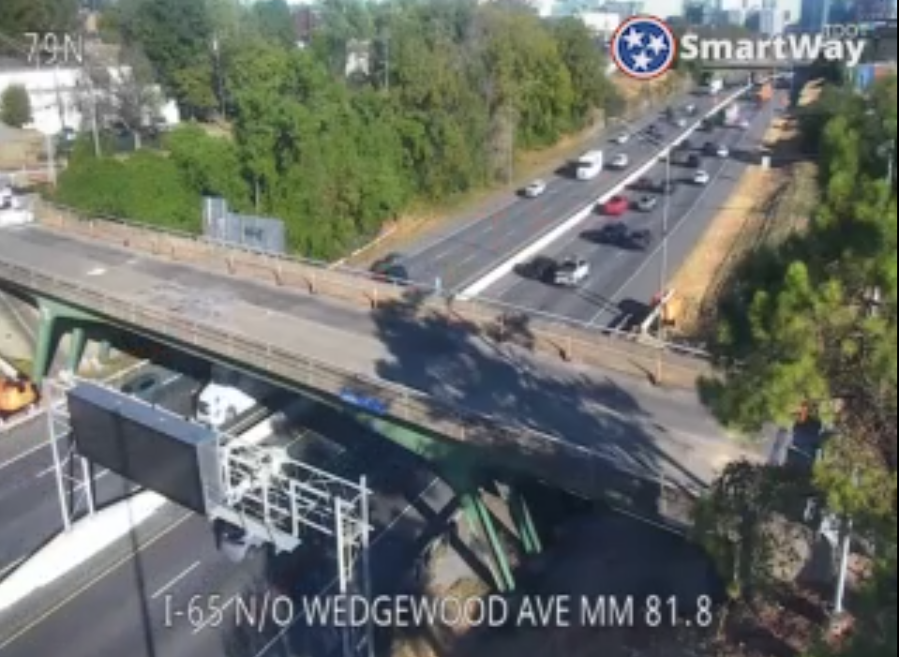
Nashville’s Hamilton Avenue bridge over Interstate 65 is slated for demolition following its closure in September, when a HELP truck operator discovered damage to the crossing.
The bridge has remained closed since the damage was found. Its planned removal means the Hamilton Avenue connection will not simply reopen in its existing form, making alternate routes an ongoing consideration for residents, businesses and others who use the local street.
The closure applies to the bridge carrying Hamilton Avenue above the interstate. It does not, by itself, establish a closure of I-65. Drivers should distinguish between restrictions on the neighborhood crossing and any separate interstate traffic controls associated with demolition.
That distinction matters on a highway serving both Nashville-area commuters and long-distance travelers. I-65 is one of three major interstate corridors through Nashville, alongside I-24 and I-40. Changes affecting traffic beneath a bridge can have a much broader reach than the closure of the street above it.
For people making shorter trips, however, the loss of a local crossing can be significant even when interstate traffic continues moving. Streets that bridge a limited-access highway connect areas that cannot be reached by simply turning onto the next block. A detour may send drivers to busier roads and create a longer journey for someone walking or cycling.
Nashville’s interstate system reshaped travel across the city during the second half of the 20th century. The highways improved regional access while also dividing established street networks. Bridges such as the Hamilton Avenue crossing provide connections across those corridors, making their condition important beyond the traffic carried on the highway itself.
The discovery by a HELP operator also highlights a less visible part of Tennessee’s highway operations. The Tennessee Department of Transportation’s HELP program provides freeway incident-management assistance, including help for stranded motorists and support at traffic incidents. Its operators work along busy highway corridors where disabled vehicles, debris and other hazards can quickly create additional risks.
HELP patrols are distinct from formal bridge inspections. Tennessee’s bridge inspection program operates within a national framework intended to evaluate structural conditions and identify maintenance or safety needs. Observations made between inspections can also bring problems to transportation officials’ attention, as happened when the damage at Hamilton Avenue was discovered.
A demolition decision is separate from the work of establishing any future connection. Removing a damaged bridge, designing a replacement and constructing a new crossing are different tasks, each involving engineering and coordination. Residents planning around the closure should not treat demolition as a reopening date or assume that removal alone restores access across the interstate.
Taking down a bridge above an active highway also requires careful traffic management. Depending on the demolition method and work sequence, such projects can involve protective measures, lane restrictions or temporary roadway closures. Those are general considerations for this type of work, not a description of an announced traffic plan for Hamilton Avenue.
For travelers, the practical step is to check current conditions before departure rather than rely on a familiar route. TDOT’s SmartWay traffic map, available at smartway.tn.gov, provides highway traffic information and camera views. Tennessee’s 511 traveler information service is another option for checking road conditions. Project notices and posted detour signs should guide travel around the work area.
Drivers using navigation apps should also follow physical barricades and signs when an app’s directions conflict with conditions on the street. A closed bridge is not an available shortcut, and nearby residential streets may not offer a continuous route across the interstate.
People walking or bicycling should plan an alternate crossing with particular attention to sidewalks, intersections and highway ramps. A route that works for a car may be difficult or unsuitable on foot. Allowing extra time can be especially important for trips to work, appointments or transit connections.
Questions about state highway operations can be directed through TDOT’s contact information at tn.gov/tdot. Metro Nashville’s hubNashville service, available online and through 311, accepts local service requests and can help route concerns about city streets, signs and neighborhood traffic.
For now, the central change is clear: the Hamilton Avenue bridge remains closed and is slated to come down. Residents should continue planning around the interrupted crossing while watching for demolition-related traffic notices that distinguish local access restrictions from any changes on I-65.